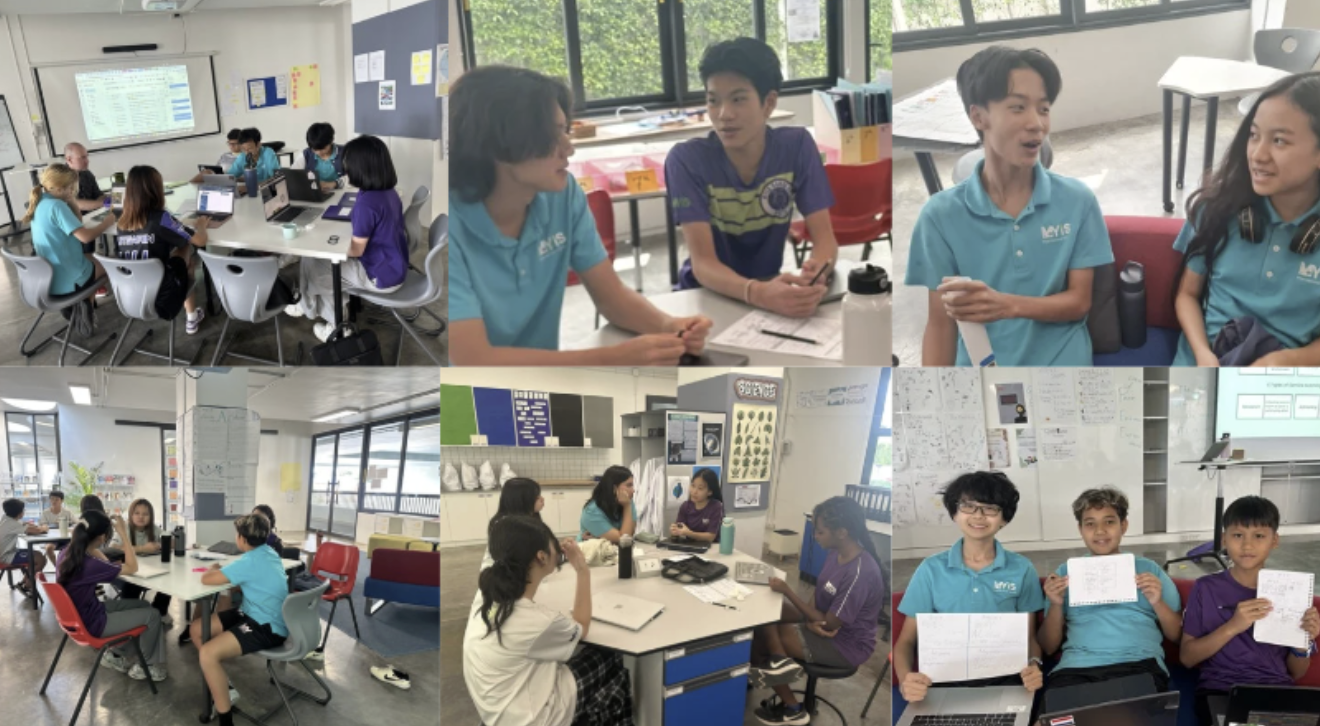
In the Middle Years, students engaged in service learning. The stages of service learning promote reflection, and students took time to reflect on their trip. Here are some of their thoughts:
Leonce: “I was surprised at the high extinction rate these days.”
Kaley: “I think the most memorable part would be the river float, because everybody is there together and it was fun.”
Bee: “I tried to catch insects inside of our tent” (interaction with wildlife)
Brooke: “Bamboo brings out 30% more oxygen than normal trees and plants.”
PG: “I learned the word zoopharmacognasy.”
Pun and Gamsai: “We learned a lot about plants and animals, specifically Banteng. We learned that they are extinct.”
After reflecting, students engaged in an investigation task where they conducted research by exploring service projects from other schools. They then sorted these projects into the four different types of service: direct, indirect, research, and advocacy. During the sorting process, students communicated their reasoning for why each project belonged to a specific category.
The investigation connects with the overnight trip to Our Land by extending students’ reflections into actionable learning. During the trip, students engaged with nature, observed wildlife, and gained firsthand experience with environmental conservation. By researching service projects from other schools and categorizing them into direct, indirect, research, and advocacy, students deepened their understanding of how service can address real-world issues like those they encountered on the trip. This process helped them connect their personal experiences to broader global efforts, encouraging them to think critically about how they, too, can contribute to meaningful change.